
Effective Online Marketing for Estate Planning Practices
The average estate planning attorney marketing budget is spent across too many channels with too little strategy. A blog post here, a social media update there, a Google Ad running on autopilot, maybe a newsletter that goes out when someone remembers to write it. The result: mediocre performance across all channels and no clear understanding of what's actually generating clients.
Effective online marketing for estate planning practices starts with a counterintuitive principle: do less, but do it well. Three channels executed with focus and consistency will outperform eight channels executed sporadically.
Channel 1: Your Website (The Foundation)
Your website isn't a marketing channel - it's the hub that every other channel feeds into. Every Google search, social media click, referral partner recommendation, and paid ad ultimately directs a potential client to your website. If the website doesn't convert, nothing else matters.
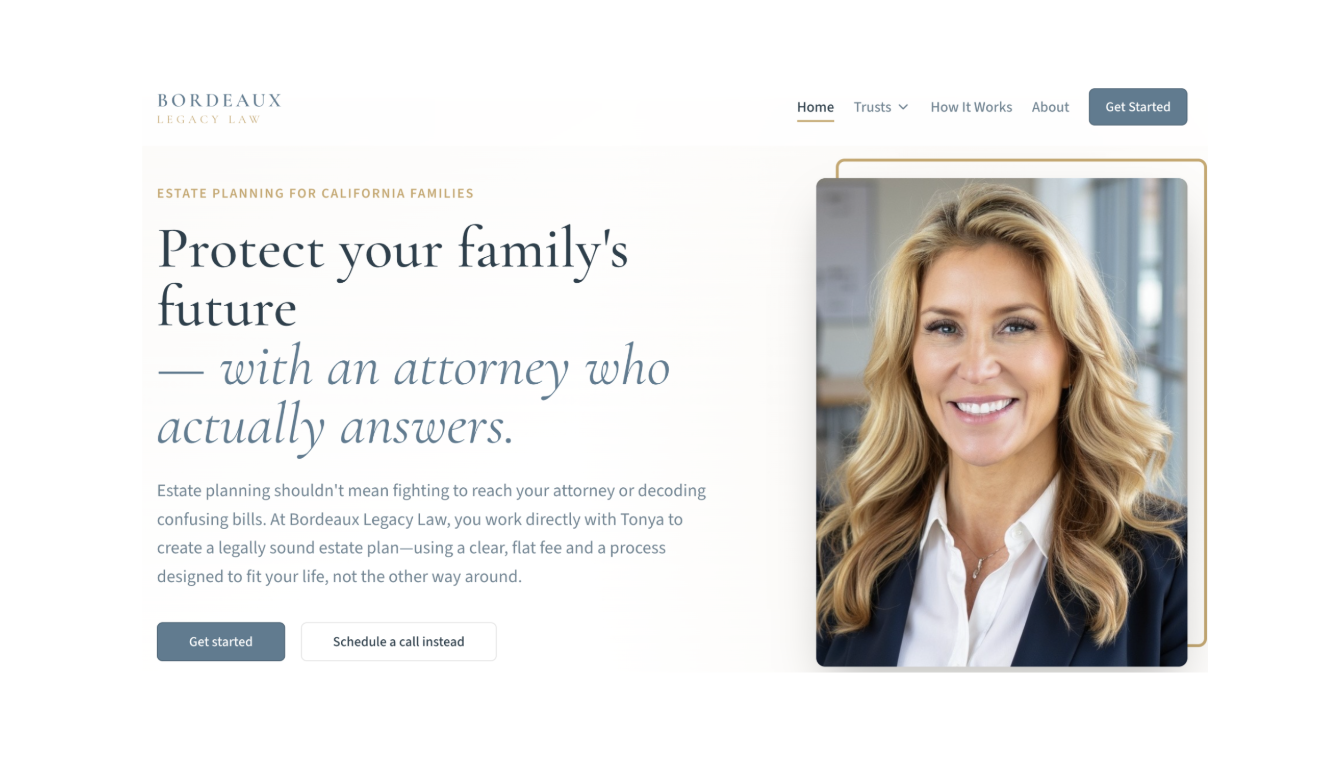
The conversion elements that matter for estate planning websites: a clear headline that communicates who you serve and what outcome they can expect, a visible and low-friction call to action (digital intake beats "call us" every time), social proof within the first scroll (testimonials, credentials, or trust indicators), a transparent process section that answers "how does this work?", and mobile optimization (over 60% of estate planning searches happen on phones).
Test this: have someone who's never visited your website look at it for 10 seconds and then close it. Ask them: What does this firm do? Who is it for? What should I do next? If they can't answer all three, the website needs work.
Channel 2: Search (The Intent Channel)
Google search is unique because it captures intent. Someone searching "estate planning attorney [your city]" is actively looking for what you offer. No other marketing channel provides this level of purchase intent.
There are two search strategies and both are worth pursuing:
Organic search (SEO) is the long game. It takes 3–6 months to see meaningful results, but the traffic is free, compounds over time, and converts at a higher rate than paid traffic. The strategy is straightforward: create content that answers the questions your ideal clients are searching for, optimize your Google Business Profile with complete information and reviews, and ensure your website is technically sound (fast, mobile-friendly, properly structured).
Paid search (Google Ads) is the immediate channel. You can start generating leads within days, but the cost per click in estate planning is significant ($15–$40 in most markets). The key to profitable paid search is tight targeting and landing page alignment. Don't bid on broad terms like "estate planning." Bid on specific terms like "living trust attorney [city]" and send that click to a landing page specifically about living trusts, with a clear next step. Generic ads to generic pages burn budget.
Channel 3: LinkedIn (The Relationship Channel)
LinkedIn is the most underutilized marketing channel for estate planning attorneys. It's where financial advisors, CPAs, insurance agents, and other attorneys spend their professional attention. It's where your referral network lives.
The LinkedIn strategy that works: post 2–3 times per week with content that demonstrates your expertise without selling your services. Share observations about the estate planning industry. Discuss anonymized client scenarios that illustrate why professional planning matters. Comment on regulatory changes. Offer practical insights that your network can share with their own clients.
The posts that perform best on LinkedIn aren't polished marketing pieces - they're authentic perspectives from a practitioner. "I met with a client this week who thought their DIY trust covered everything. Here's what was missing..." outperforms "Top 5 Reasons You Need an Estate Plan" every time.
The Content Strategy Behind All Three
Effective content for estate planning marketing follows a principle: answer one question, for one audience, in one piece of content.
"What blended families need to know about trust planning" is a good topic. "Everything you need to know about estate planning" is not. Specificity attracts the clients you want. Generality attracts nobody in particular.
Create one substantial piece of content per month - a detailed article, a comprehensive video, or an in-depth guide. Then distribute it: share on LinkedIn, excerpt it for social media, email it to your referral network, link to it from your Google Business Profile posts. One piece of content, distributed consistently, outperforms a dozen thin pieces scattered randomly.
Measuring What Matters
The metrics that matter for estate planning marketing are deceptively simple:
Leads generated per channel per month. Not website visitors - leads. People who took the action you wanted them to take (started intake, booked a consultation, requested information). This is the metric that connects marketing spend to revenue.
Cost per lead by channel. Divide your spend per channel by the leads it generates. This tells you where to invest more and where to pull back.
Lead-to-client conversion rate. What percentage of leads become paying clients? If your conversion rate is low, the problem might be your follow-up process, not your marketing.
Track these three metrics monthly and you'll know more about your marketing effectiveness than attorneys spending five times your budget without measurement.
The Consistency Principle
The single biggest factor in online marketing success for estate planning attorneys isn't budget, strategy, or channel selection. It's consistency. The firms that post weekly, update their website monthly, respond to inquiries within hours, and maintain their Google Business Profile see compounding returns over time.
The firms that run a campaign for two months, get distracted by client work, and start again six months later never build momentum. Marketing is a system, not an event. Build the system, maintain it, and let it compound.